Short answer: Dry ash sitting on your car is lower-risk than most people assume, but it turns corrosive fast once moisture touches it — morning fog, dew, or a light rain. Rinse it off with plain water as soon as you reasonably can, never wipe it dry or run dry wipers across it, then wash with a pH-neutral shampoo and a soft mitt. Skip the drive-through touchless wash during a heavy ashfall week; it won't lift bonded ash and can grind loose grit into the paint. A wash plus a fresh sealant handles ordinary ash exposure. If ash has already etched or dulled the clear coat, that's a polishing job, and that's honestly not something we offer.
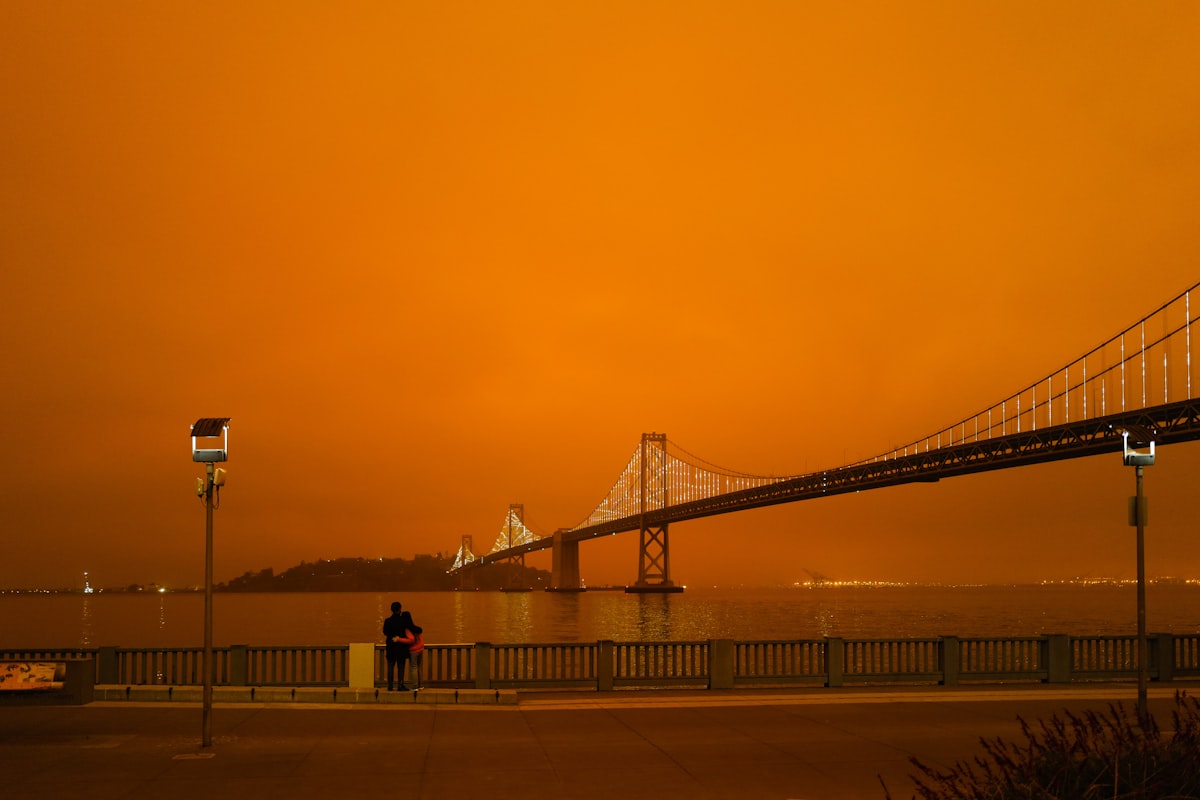
Bay Area fire season runs roughly August through October, and the frustrating part is that the worst ash days here often aren't caused by a fire anywhere near you. Diablo wind events push smoke and fine ash from fires burning in the North Bay, the Sierra foothills, or even Oregon straight down into the Santa Clara Valley and across the Peninsula, so you can wake up to a dusting of gray-white flecks on your windshield on a morning when the local sky looks almost clear. That disconnect between "no fire nearby" and "ash on my car" is exactly why so many people underestimate what's actually sitting on their paint.
This isn't the same as regular road dust, and treating it like ordinary grime is how people end up doing real damage trying to get rid of it.
What Ash Actually Does to Paint
Wildfire ash is a mix of burned plant material, building materials, and combustion byproducts, and its chemistry varies with what burned — anywhere from mildly alkaline to acidic. Sitting dry on a clear coat, it's a relatively low-risk nuisance: gritty, ugly, but not yet reactive. The problem starts the moment moisture gets involved. Bay Area mornings bring real fog and dew even in the middle of fire season, and that moisture activates the chemical compounds in the ash, turning a passive layer of dust into something that can etch into the clear coat if it's left long enough.
Don't run your wipers over a dry, ash-covered windshield. Ash particles are abrasive, similar to fine sand, and a dry wiper blade drags that grit across the glass. It's one of the fastest ways to put a permanent haze in your windshield — one that shows up worst at night, staring into oncoming headlights. Rinse or use washer fluid first, every time.
| Ash exposure | What's actually happening | What to expect |
|---|---|---|
| Dry ash, under 24 hours, no moisture | Largely inert — sitting on top of the clear coat, not bonded | Rinses off clean with minimal risk |
| Ash plus morning fog or dew, same day | Chemical compounds activate and begin interacting with the clear coat surface | Wash it within the day — still fully recoverable |
| Ash left 2-3 days through multiple fog cycles | Repeated wet/dry cycles let the ash work deeper into the surface | Higher odds of a faint etch or water-spot-like mark, even after washing |
| Dry-wiped or dry-wiper-cleared | Abrasive grit dragged across paint or glass | Fine scratching on top of any chemical etching already happening |
How to Actually Get It Off Without Making It Worse
The order of operations matters more here than which specific product ends up in your hand, because the two biggest mistakes — dry wiping and skipping straight to a scrub — are both about skipping steps, not choosing the wrong bottle.
- Blow or gently rinse off loose, dry ash first, before any water or cloth touches the surface, so you're not grinding dry grit into the paint during the wash itself.
- Rinse thoroughly with plain water, working from the roof down, to soften and float away whatever's left before you introduce soap.
- Wash with a pH-neutral shampoo and a soft microfiber wash mitt, rinsing the mitt frequently — ash is gritty enough that a dirty mitt reintroduces the exact scratching risk you're trying to avoid.
- Dry with a clean, separate microfiber towel immediately rather than air-drying, since Bay Area water is hard enough to leave its own spots without ash residue mixed in.
- Reapply or refresh a paint sealant once the surface is clean and dry, especially if you know more ashfall is coming later in the season.
Skip the Touchless Drive-Through During a Bad Ash Week
A touchless car wash sounds like the safe option during fire season, but it's often the wrong one. Touchless washes rely almost entirely on high-pressure water and chemical detergent with no physical contact, and bonded ash — the kind that's already been through a fog cycle or two — frequently doesn't fully release under water pressure alone. You can end up driving away with a "clean" car that's still carrying reactive ash residue in the door jambs, mirror housings, and lower body panels. A hand wash with actual contact, done carefully with a clean mitt, does a more thorough job specifically because someone can see and target the spots the touchless bay misses.
Don't Forget the Interior
Fine ash and smoke particles get pulled into the cabin through the HVAC intake during a heavy smoke week, and that's usually where a lingering smoky smell weeks after the actual fire comes from — it's settled into the dash, seats, and carpet, not just floating in the air. Our interior deep clean addresses the surfaces and fabric directly; if the smell itself is the main problem rather than visible ash, our guide to getting smoke smell out of a car covers what actually works versus what just masks it temporarily.
Check air quality before you wash outside. On the worst Diablo wind days, AQI can spike into unhealthy ranges even without a nearby fire. If AirNow.gov or a local monitor shows hazardous air, it's reasonable to wait a day rather than stand outside detailing in it — the ash on your car isn't going anywhere in the meantime, and a day's delay is far less risky than heavy smoke exposure.
When It's Beyond a Wash
If ash sat through several fog-and-dry cycles before anyone got to it, you may be looking at faint etching or a dulled patch in the clear coat rather than surface grime. A full exterior wash with decontamination lifts everything that's still liftable, and a fresh sealant helps the surface resist the next ashfall — but it won't level out clear coat that's already been chemically etched. That kind of correction is machine polishing, and it's not a service XN provides. We'll always say so rather than take a job we can't deliver on.
Getting Ready Before the Next Event
You can't control when the next Diablo wind event pushes smoke down from the North Bay or the Sierra foothills, and fire season here typically runs into October, sometimes later in a dry year. What you can control is whether your sealant is current going into it and how fast you rinse ash off once it lands — treating "I'll wash it this weekend" as the actual risk instead of the ash itself. Similar to how we cover why fresh contamination is easier to remove than baked-on residue in our Santa Cruz tar guide, the same logic applies here: speed matters more than the product. If you're exposed to multiple ash events a season, a monthly membership keeps a fresh sealant on the car through the worst stretch instead of playing catch-up after each one, and our detailing frequency guide breaks down how that schedule should shift during fire season versus the rest of the year.
The products we actually use
Ash cleanup starts with a plain water rinse — sometimes a gentle blow-off first if the ash is still dry — to clear loose grit before any wash mitt touches the surface. We follow with a Chemical Guys pH-neutral wash shampoo, rinsing the mitt often, since ash is gritty enough that a reused, dirty mitt causes the exact fine scratching we're trying to prevent. Once the car is clean and fully dry, we finish exterior paint with a Meguiar's or Gyeon sealant that holds for roughly three months, and for the interior, Chemical Guys fabric and interior cleaners handle dash, door panels, and upholstery where fine ash and smoke particles settle during a bad air week.
To be direct about what this sealant is and isn't: it's a polymer layer that helps ash release easier and holds a few months of gloss, not a multi-year protective shell, and we don't sell one. If a clear coat is already etched from ash that sat through repeated fog cycles, sealant and washing won't restore it to a level, glossy finish — that requires machine polishing, which is outside what XN offers. We'd rather tell you that plainly than take a job we can't finish right.
Frequently Asked Questions
Is wildfire ash actually dangerous to my car's paint, or is it just dust?
It's more than dust. Wildfire ash is a mix of burned plant material, building material, and combustion byproducts, and its chemistry runs from mildly alkaline to acidic depending on what burned. Dry ash sitting on paint is relatively low-risk. The danger starts when moisture gets involved — morning fog, dew, or a light drizzle — because that's when the chemical compounds in the ash activate and can start etching clear coat, especially if it's been ground in by wind or a wiper blade first.
Can I just use my wipers to clear ash off the windshield?
Don't do this if you can avoid it. Ash particles are abrasive, similar to fine sand, and dragging a dry wiper blade across them scratches the glass and can leave a permanent haze that's genuinely hard to see through at night with oncoming headlights. Rinse the windshield with plain water first, or use the washer fluid on a low ash day, before the wipers ever touch the glass.
Should I use a leaf blower or air compressor to remove dry ash instead of washing?
Blowing off loose, dry ash before you wash is a genuinely good first step and reduces how much grit ends up in your wash water and mitt. What it doesn't do is replace washing — ash that's already made contact with the paint under any moisture needs a real rinse and pH-neutral wash to fully lift, and blowing alone can also just relocate fine particles rather than remove them.
How is Bay Area wildfire ash different from ash in a place like Los Angeles?
The mechanism is similar, but the Bay Area's exposure is usually indirect. Most of our worst ash and smoke events come from fires burning in the North Bay, Sierra foothills, or even Oregon, carried in by wind patterns rather than a fire burning inside city limits. That means we can get heavy ashfall on a day when the immediate area looks completely normal otherwise, which catches people off guard compared to a fire burning visibly nearby.
Does a fresh paint sealant actually help during fire season?
Yes, meaningfully. A sealant gives the clear coat a smoother, less porous surface, so ash sits on top instead of working into microscopic texture, and it rinses off with less product and less agitation. It's not a shield that lets you skip washing — you still need to get ash off within a reasonable window, especially once moisture is in the forecast — but it lowers the odds that a bad ash day leaves a permanent mark.
Should I cover my car during a heavy smoke and ash event?
If you have a breathable car cover and know ash is coming, it's a reasonable precaution, particularly for a car that's going to sit outside for several days during a sustained smoke event. Just make sure the cover itself is clean before you put it on — a dirty cover dragged across paint can cause the same fine scratching as a dirty wipe-down.
Can heavy ash exposure affect my car's interior too?
Yes. Fine ash and smoke particles get pulled in through the HVAC intake and settle into the cabin, dash, and upholstery, which is where that lingering smoky smell after a bad fire week usually comes from. Our interior deep clean addresses the surfaces and fabric, and for genuinely stubborn smoke odor we have a dedicated guide covering the deeper causes and fixes.
Do you offer faster booking during a bad fire week?
We try to. Fire season creates real demand spikes, and we'll always take a same-week request when we have room — call or book online and mention the ash if timing matters to you. A monthly membership is also worth considering if you're regularly exposed; it keeps your sealant current through the worst of August through October instead of playing catch-up after each event.
Book a Post-Ash Wash Anywhere in the Bay Area
Mobile to your driveway, or drop off at our Santa Clara shop. Same-week booking during fire season when we have room.
Book Now →