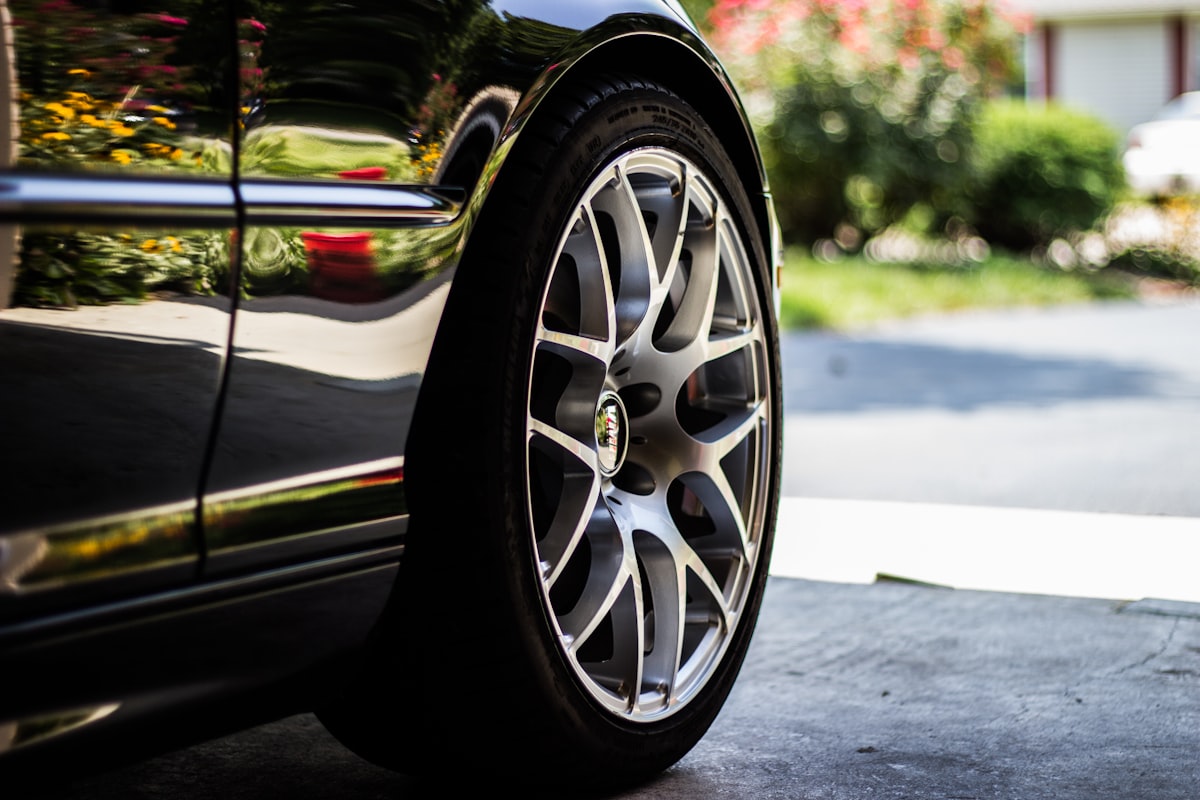
Short answer: Brake dust is fine iron and carbon particulate that lands on the wheel hot and bonds into the clear coat the longer it sits. Rinse the wheel cool, apply a pH-balanced wheel cleaner, agitate gently with a dedicated wheel brush, then rinse and dry with a separate towel — never the one you use on paint. Newark's stop-and-go approach to the Dumbarton Bridge and the signals around NewPark Mall generate dust faster than a typical commute, so a two-to-three-week cleaning cadence is what actually keeps it from baking on for good.
Newark sits at the foot of one of the Bay Area's most congested toll crossings. The Dumbarton Bridge carries tens of thousands of vehicles a day between the East Bay and the Peninsula tech corridor, and the backup at the toll plaza and along the Highway 84 approach is a daily fact of life for anyone commuting out of the Lakeshore, Bridgeway, or Birchwood neighborhoods near the bay. That backup means one thing for your wheels: repeated hard braking, over and over, every single commute — and brake dust is generated by braking events, not by miles driven. A car doing thirty free-flowing miles on 880 sheds far less dust than a car doing five miles of stop-and-start toward the bridge.
The same pattern shows up around town. The signalized corridor along Cedar Boulevard and Newark Boulevard near NewPark Mall means more stopping and starting on ordinary errands than a straight shot through most other South Bay cities. Add in the road grit kicked up by the truck traffic serving Newark's distribution and warehouse district near the old salt pond flats, and you've got a city where wheels genuinely do accumulate brake dust faster than the South Bay average — this isn't a generic complaint that would read the same in any other city; it's specific to how Newark's roads actually move.
Why the Dust Bonds In If You Wait
Brake dust is mostly fine iron, carbon, and copper particulate shed from the pad material every time you slow down. On its own, fresh dust just sits on the wheel's surface and looks bad. The problem is heat and time. The dust lands on a wheel that's genuinely hot from braking, and that heat helps the particles start working into the wheel's clear coat instead of resting on top of it. Left for weeks without a proper cleaning — easy to do when the wheels are the last thing anyone thinks to wash — that bonded layer turns into a dull, grayish haze that a quick rinse won't touch anymore.
The Real Removal Process
- Let the wheels cool first. Never clean a wheel right after driving or while it's sitting in direct sun — heat opens the clear coat's pores and makes it easier for an acidic cleaner to etch in rather than just clean.
- Rinse thoroughly before any product touches the wheel. This knocks loose grit off first, so you're not grinding sand and dust into the finish with the next step.
- Apply a pH-balanced, non-acidic wheel cleaner and let it dwell for the time the label calls for — usually one to three minutes. Don't let it dry on the wheel; if it's evaporating before you're done, rinse and reapply.
- Agitate with a dedicated soft wheel brush, working into the barrel and around the spokes, plus a smaller detail brush for the tight recesses around lug nuts where dust concentrates most.
- Rinse top to bottom, wheels last if you're washing the whole car, so iron particulate never gets a chance to contaminate a wash mitt that then touches your paint.
- Dry with a microfiber towel dedicated to wheels only. The same towel you use on paint will pick up embedded grit and can put fine scratches into your clear coat the next time you use it there.
Skip the acid-based "wheel brightener" sprays. They work fast, which is exactly the problem — on a painted or clear-coated wheel finish, and on most aftermarket wheels, an acidic cleaner can dull or discolor the surface, especially if it's applied to a hot wheel or allowed to dry in the sun before rinsing. A pH-balanced cleaner takes a little longer but won't damage the finish you're trying to protect.
A Realistic Cleaning Cadence for Newark Driving
How often your wheels actually need attention depends on how much stop-and-go braking you're doing, not just how many miles you drive.
| Driving pattern | Braking frequency | Recommended wheel cleaning |
|---|---|---|
| Daily Dumbarton Bridge commuter | Heavy — toll plaza and 84 approach backups most weekdays | Every 2–3 weeks |
| Local errands near NewPark Mall / Cedar Blvd | Moderate — frequent signals, shorter trips | Every 3–4 weeks |
| Mostly highway miles, light local driving | Lower — fewer full stops per mile | Monthly |
When It's Already Beyond a Wash
If your wheels have a dull gray haze that survives a careful cleaning with a proper wheel cleaner and brush, the dust has likely already etched into the clear coat rather than sitting on top of it. Our tire and wheel detail will strip everything that's still removable and leave the wheel as clean as it can get without altering the finish — but leveling an etched wheel back to a like-new gloss is a machine polishing and wheel-refinishing job, and that's not something XN offers. We'll tell you plainly if that's what a wheel needs rather than take the appointment and let you down.
Mobile Detailing Around the Bayshore Neighborhoods
We bring every product and tool to you, but we still work off a standard outdoor tap and a power outlet at your location — no van, no water tank. Most Newark driveways handle that fine. If you're in one of the apartment or condo complexes around Lakeshore, Bridgeway, or Birchwood without outdoor water access in your stall, dropping off at our Santa Clara shop is about 20 to 25 minutes away via 880, and it's often the simpler option than trying to make a mobile appointment work in a lot with no tap. Either way, a proper tire and wheel detail is part of every full detail we do, and it can also be booked as its own service if your wheels are the only real complaint.
If you're dealing with more than just wheels — the industrial dust and road grit common to Newark's warehouse corridor settles on paint and glass too, similar to what we cover in our guide to construction dust in Milpitas — a full exterior wash and decontamination handles both at once, and a fresh sealant makes the next round of brake dust and road grime easier to rinse off before it has a chance to bond in.
The products we actually use
Wheels get their own dedicated wash step with a pH-balanced cleaner and a wheel-only brush and towel — never the same products or tools we use on paint. The rest of the exterior gets a Chemical Guys pH-neutral shampoo wash, and we finish with a Meguiar's or Gyeon paint sealant that holds for roughly three months and makes the next round of road grime and brake dust easier to rinse off before it bonds in.
None of what we use is a multi-layer protective coating, and we don't sell one. If a wheel's clear coat has already etched from months of baked-on brake dust, sealant and a thorough cleaning won't restore the factory gloss — that's a wheel-refinishing and machine-polishing job, which is outside what XN does. We'd rather say so directly than promise a result we can't deliver.
Frequently Asked Questions
Why does brake dust seem worse in Newark than in other South Bay cities?
Brake dust comes from braking events, not miles driven, and Newark sits at the foot of the Dumbarton Bridge — toll plaza and Highway 84 backups mean repeated stop-and-start braking most commutes, plus the same pattern at the signals near NewPark Mall. More braking per mile means more dust per mile.
Is brake dust actually harmful to my wheels, or just ugly?
Both, depending on how long it sits. Fresh dust is mostly fine iron and carbon particulate that just looks bad. But it lands while the wheel is genuinely hot, and heat plus time lets it bond into the clear coat instead of sitting on top — that's what turns into a gray haze a normal wash won't lift.
Can I use the same soap I wash my car's paint with on the wheels?
Don't. Wheels carry iron particulate that regular car shampoo isn't formulated to break down, and using the same wash mitt on wheels and paint is a common way people put fine scratches into their clear coat. Use a dedicated pH-balanced wheel cleaner and a separate brush and towel, every time.
How often should I clean my wheels if I commute across the Dumbarton Bridge daily?
Every two to three weeks is realistic for a daily bridge commuter, versus once a month for someone doing mostly local Newark errands around Cedar Boulevard or Thornton Avenue. The bridge commute's stop-and-go braking generates dust faster, so a full month between cleanings gives it more time to bake on.
Will a wheel sealant actually stop brake dust from sticking?
It slows the bond, not the dust itself — your brakes still shed particulate every time you slow for the toll plaza or a Cedar Boulevard light. What changes is what happens after: a smoother, less porous clear coat means particles sit on the surface instead of working into it, so a rinse and a gentle cleaner lift it again instead of fighting a bonded layer.
My wheels already look permanently gray and dull. Can XN fix that?
We'll tell you honestly. A thorough decontamination pass removes everything that's still removable and leaves the wheel as clean as it can get. But if brake dust has already etched or discolored the clear coat, leveling that back to a like-new gloss is a machine polishing and wheel-refinishing job, and that's not a service XN offers. We'd rather say so upfront than take a job we can't finish right.
Do you serve the Lakeshore, Bridgeway, and Birchwood apartments near the bay?
Yes. Those bayshore Newark complexes are a common stop for us. If your building's parking stall doesn't have an outdoor tap and power outlet within reach, drop-off at our Santa Clara shop is about 20 to 25 minutes away via 880 — a straightforward option instead of trying to make a mobile appointment work in a lot with no water access.
Book a Tire & Wheel Detail in Newark
Mobile to your Newark driveway, or drop off at our Santa Clara shop — about 20–25 minutes via 880.
Book Now →