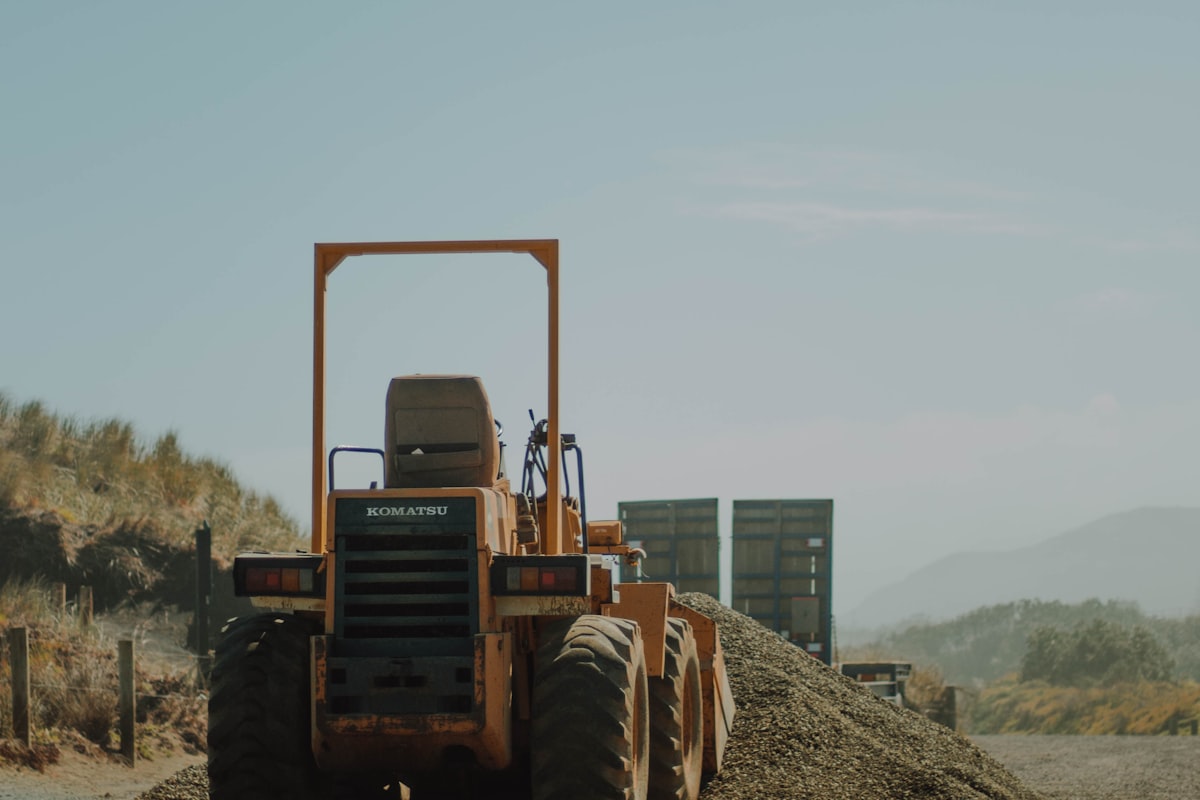
Short answer: Never wipe dried construction dust off with a dry towel or your hand — it carries gritty concrete and aggregate particles that scratch like sandpaper. Rinse first with plain water, wash with a pH-neutral shampoo using the two-bucket method, and clay-bar anything that's bonded on. Do this within a few days of a dusty stretch near an active site — dust that sits through repeated morning dew cycles can turn into a mild alkaline paste that etches clear coat. A wash, clay, and fresh sealant handles ordinary construction dust. If a patch has already dulled the clear coat, that's a polishing job, and it's honestly outside what we offer.
If you park anywhere near the Great Mall corridor, McCarthy Boulevard, or the BART station right now, you've probably noticed a fine gray film settling on your car that a normal rinse doesn't fully clear. That's not ordinary Bay Area road grime — Milpitas is in the middle of a real construction push. The South Milpitas Boulevard extension is bringing a new bridge and connector road that ties the Great Mall area to the BART station and the housing going in around it, and the Great Mall Station site itself is early into a multi-phase transit-oriented redevelopment that's slated to add hundreds of new homes to the corridor over the next several years. Active grading, demolition, and paving all throw dust into the air, and cars parked or driven through that corridor pick up more of it than cars a few miles away ever will.
Why Construction Dust Is Different From Ordinary Road Grime
Regular road dust — dirt, brake dust, pollen — is mostly inert. It sits on the clear coat and rinses off with a normal wash. Construction dust is different because a real share of it is fine cement and aggregate particulate from grading and concrete work, and cement dust is chemically alkaline. Dry, it's just dust. The problem starts when it picks up moisture — morning dew, a sprinkler running nearby, a light rain — and turns into a mildly caustic paste sitting directly on your paint. One wet-dry cycle isn't a crisis. Dust that sits on a car parked near an active site for a week or two, getting damp every morning and drying again by afternoon, is the scenario that actually starts etching the clear coat.
Don't wipe it off dry. Construction dust carries gritty aggregate particles mixed in with the fine cement powder, and dragging a dry towel or your bare hand across it is close to rubbing the panel with fine sandpaper. Rinse with plain water first to float off what you can before any cloth touches the surface.
Removing Construction Dust Without Marking the Paint
The mistake we see most often on cars parked along the Great Mall corridor is someone brushing dust off with a dry hand or a shop rag on their way out the door. That's exactly backwards — the order of operations matters more than which product you reach for.
- Rinse first with plain water, working top to bottom, to loosen and float off as much loose dust as possible before anything makes contact with the panel.
- Wash with a pH-neutral shampoo using the two-bucket method, so the dust you just lifted into your wash mitt doesn't get dragged back across the paint on the next pass.
- Clay-bar anything still bonded on. Dust that's gone through a wet-dry cycle even once tends to grip tighter than surface dirt, and clay pulls out what soap alone leaves behind.
- Dry with a clean microfiber towel immediately rather than air-drying, which just re-deposits mineral residue as new water spots — a real issue on top of already-hard Bay Area water.
| Method | What actually happens | Verdict |
|---|---|---|
| Dry wipe with hand or towel | Grinds gritty aggregate particles across the clear coat | The fastest way to swirl a car parked near a job site |
| Letting it sit through rain or dew | Alkaline cement residue reacts with the clear coat over repeated wet-dry cycles | Where real etching starts |
| Rinse + pH-neutral wash | Lifts loose and lightly bonded dust without abrasion | Handles most day-to-day dust |
| Rinse + wash + clay bar | Removes dust that's already bonded to the surface | What we use for heavier construction exposure |
| Left bonded for weeks | Can etch or dull the clear coat permanently | Beyond a wash — needs polishing we don't offer |
Milpitas Logistics: McCarthy Ranch, Sinnott, and What We Need On Site
Most of Milpitas — McCarthy Ranch, the Sinnott neighborhood, and the established single-family streets away from the BART corridor — has driveway access to an outdoor tap and a power outlet, which is all mobile detailing actually needs. We bring every product and tool ourselves, but we still run off your spigot and outlet rather than carrying our own water tank. Some of the newer construction going in right around the Great Mall Station and BART parking structures is denser housing without that kind of outdoor access. If that's your building, tell us when you book and we'll set up a drop-off at our Santa Clara shop instead — about 10 to 15 minutes down I-880, depending on traffic. We go deeper on when mobile works and when it doesn't in our mobile detailing vs. car wash comparison.
When It's Beyond a Wash
If your paint already shows a faint dull or hazed patch where construction dust sat wet for a stretch of days, a full exterior wash with clay bar decontamination will lift everything that's still liftable, and a fresh coat of sealant leaves the surface smoother so the next round of dust rinses off easier. What clay and sealant won't do is restore a clear coat that's already been microscopically etched by dust that went through too many wet-dry cycles — that's a machine polishing job to level the surface back out, and that's not a service XN provides. We'll say so plainly rather than take a job we can't finish the way you'd want.
Keeping It From Coming Back
The South Milpitas Boulevard bridge work and the Great Mall Station redevelopment are both multi-year projects, so the dust isn't a one-time thing — it's a condition you'll be living with on and off for a while if you're anywhere near that corridor. What you can control is the window between a dusty stretch and your next wash. Rinse within a few days rather than letting dew cycles work on it for a week or two, and keep a sealant current so dust releases easier between washes. Our detailing frequency guide breaks down how often that makes sense, and if you're parking near active construction regularly, a monthly membership usually pencils out better than periodic one-off washes.
The products we actually use
Every wash on a dusty Milpitas car starts with a plain water rinse, then a Chemical Guys pH-neutral shampoo — the neutral pH matters here specifically because it won't react with any alkaline cement residue the way a generic degreaser might. If dust has bonded on, we follow with a clay bar pass before ever touching a chamois to the panel. Once the surface is clean and dry, we finish with a Meguiar's or Gyeon paint sealant that holds for roughly three months, giving the clear coat a smoother, less porous surface for the next round of construction dust to fail to stick to.
To be clear about what that sealant is and isn't: it's a polymer layer that helps dust and grime release easier and adds gloss for a few months — it is not a multi-year protective coating, and we don't sell one. If a clear coat is already dulled or etched from dust that sat too long, sealant won't undo that, and neither will we; leveling a damaged clear coat back out means machine polishing, which is outside what XN offers, and we'd rather say so upfront than take a job we can't finish right.
Frequently Asked Questions
Why does Milpitas have more construction dust right now than other Bay Area cities?
Milpitas is mid-buildout around its BART station. The South Milpitas Boulevard extension is adding a new bridge and connector road linking the Great Mall area to the BART station and nearby housing, and the Great Mall Station site itself is in the early phases of a multi-year transit-oriented redevelopment planned to bring hundreds of new homes to the corridor. Active grading, demolition, and paving all throw fine dust into the air, and cars parked or driven near Great Mall Parkway, Montague Expressway, and the McCarthy Boulevard corridor pick up more of it than cars parked away from the construction zones.
Is construction dust worse for my paint than regular road dirt?
Yes, for a specific chemical reason. Ordinary road dust is mostly inert dirt and brake dust that rinses off. Construction dust from grading and concrete work carries fine cement and aggregate particles, and cement dust is alkaline. On its own it just sits on the surface, but once it picks up moisture — morning dew, a sprinkler, a light rain — it can turn into a mildly caustic paste that reacts with clear coat if it isn't washed off before it dries again.
Can concrete dust actually etch my clear coat?
It can, if it's left to go through a wet-dry cycle more than once. A single dusty commute washed off within a few days is not a problem. Dust that settles on a car parked near an active site for a week or two, gets wet from dew each morning, and dries again repeatedly is the scenario that etches — the alkaline residue slowly attacks the clear coat's surface. That's why timing the wash matters more than the amount of dust.
What's the safest way to get dried construction dust off without scratching the paint?
Never wipe it dry — construction dust contains gritty aggregate particles that act like sandpaper under a towel or your hand. Rinse the car first with plain water to float off as much loose dust as possible, then wash with a pH-neutral shampoo using the two-bucket method so you're not dragging the dust you just lifted back across the panel. For dust that's bonded on rather than just sitting on top, a clay bar pass after the wash pulls out what soap alone won't.
Do you serve McCarthy Ranch and the neighborhoods near the Great Mall BART station?
Yes, all of Milpitas, including McCarthy Ranch, the Sinnott neighborhood, and the newer developments going up near the BART station. Most of that area is single-family homes and townhomes with driveway access to an outdoor tap and outlet, which is all mobile detailing needs. If your unit doesn't have outdoor water access, we can set up a drop-off at our Santa Clara shop instead.
Will a paint sealant stop construction dust from sticking?
It changes how dust releases rather than stopping it from landing. A fresh sealant leaves the clear coat smoother and less porous, so dust sits on top instead of working into microscopic texture, and it rinses off with a plain hose-down more often than not. It doesn't make the car immune — you still need to wash off a heavy dust layer in a reasonable window rather than letting it sit through repeated wet-dry cycles.
My car already has faint dull spots from dust that sat through some rain — can you fix that?
We'd rather tell you honestly than take the job and disappoint you. Faint dull or hazed spots from alkaline dust residue usually mean the clear coat has been microscopically etched, and leveling that back to a uniform gloss is a machine polishing job. XN doesn't offer machine buffing or abrasive paint restoration. What we can do is a full decontamination wash and clay treatment to remove everything that's still liftable, plus a fresh sealant so the surface stops getting worse and looks as good as it can.
How far is Milpitas from your Santa Clara shop?
About 10 to 15 minutes via I-880 or Calaveras Boulevard, depending on traffic. We come to your Milpitas address first — the Santa Clara shop is there as a drop-off option for anyone without outdoor water and power on site.
Book a Construction Dust Wash in Milpitas
Mobile to McCarthy Ranch, Sinnott, and the BART corridor — or drop off at our Santa Clara shop, 10 to 15 minutes down I-880.
Book Now →