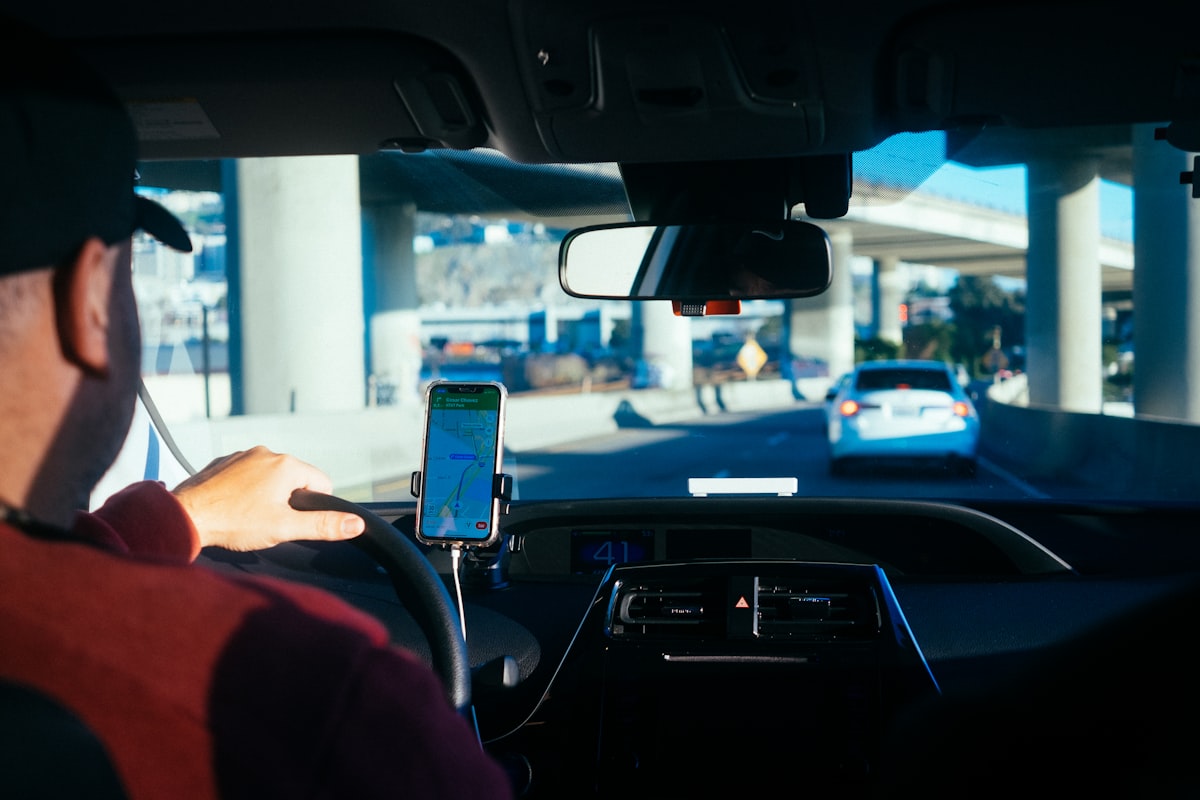
Short answer: You can't detail your way out of a full-time driving schedule, and you don't need to. A 60-second touchpoint wipe between rides, a 5-minute reset at the end of each shift, and a weekly deeper clean handle 90% of what accumulates. What they can't handle — ground-in stains, a mystery odor that keeps coming back, road film that's baked onto the paint — is where a professional detail earns its cost back in avoided low ratings and lost trip requests. For a full-time driver, a monthly membership usually pencils out cheaper than reacting to problems one at a time.
If you drive for Uber or Lyft in the Bay Area, your car is doing something no personal vehicle does: hosting 15 to 25 strangers a week, many straight off a flight at SFO or SJC with luggage and road fatigue, others grabbing a quick ride between meetings along the 101 tech corridor. Every one of them leaves something behind — a shoe scuff, a dropped fry, a phone charger cable, sometimes a lingering perfume or a spilled coffee. None of it is dramatic on its own. All of it compounds fast enough that a car detailed a month ago can look and smell noticeably worse after two weeks of steady driving.
Here's the part most cleaning guides skip: the apps are actively grading you on this, in real time, whether you notice or not.
How the Rating System Actually Punishes a Dirty Car
After a meaningful share of rides, Uber and Lyft both surface some version of a post-trip prompt asking the passenger whether the vehicle was clean. A "no" doesn't show up anywhere you can see directly — there's no notification that says "you lost a star for cleanliness on Tuesday's airport run" — but it folds into your overall rating average the same way a rude comment or a bad route would. Drop under your market's minimum threshold consistently, and you get a warning email, then a review, then in the worst case, deactivation. The frustrating part is you rarely know it happened until the pattern's already visible in your weekly rating trend.
That's the actual argument for a cleaning routine that runs continuously instead of reactively. You're not cleaning for the ride you just finished — you're cleaning for the one after that, and the one after that, because you don't get to see which specific trip cost you the star.
The Daily Reset (Between Rides and End of Shift)
This is the maintenance layer that actually fits inside a driving schedule. None of it takes more than a few minutes:
- Touchpoint wipe (60 seconds, between rides when possible). Steering wheel, gear selector, door handles and armrests, seat belt latches — anywhere a passenger's hands or bag touched. A pack of interior-safe wipes in the console makes this genuinely fast.
- Visual scan (10 seconds, every drop-off). Check the seat and floor behind the passenger before your next pickup. Catching a dropped receipt or a coffee ring immediately is a five-second fix; finding it three rides later is a stain.
- End-of-shift vacuum (5 minutes). A cordless hand vacuum on floor mats, seat creases, and the console tray clears out crumbs and grit before they get walked further into the carpet fibers by the next passenger's shoes.
- Trash and restock (2 minutes). Empty any console trash bag, wipe down cup holders, and restock whatever you offer riders — mints, water, phone chargers — so the car looks intentional, not just tidied.
- Odor check (10 seconds). Crack the windows for the last few minutes of your drive home. A car that airs out between shifts needs far less air freshener to smell neutral the next morning.
Don't overcorrect with air freshener. A meaningful share of one-star cleanliness complaints aren't actually about dirt — they're a scent-sensitive passenger reacting to an overpowering cabin freshener. A light, low-key approach (an activated charcoal pouch under the seat, cracked windows between shifts, a subtle diffuser) reads as clean without the risk of the opposite complaint.
The Weekly Deeper Clean
- Full vacuum — seats, carpets, trunk, and door pockets — not just the visible floor mats.
- Wipe every hard surface — dashboard, center console, door panels, air vents — with an interior-safe cleaner, not just a dry cloth.
- Glass, inside and out. A hazy interior windshield reads as neglect even when the rest of the car is spotless, and it's the first thing a passenger looks through when they get in.
- Check under the seats. This is where dropped items, ground-in dirt, and the source of most mystery odors actually live.
Daily vs. Weekly vs. Professional — What Realistically Belongs Where
| Task | Who handles it | Time / cost |
|---|---|---|
| Touchpoint wipe, visual scan | You, between rides | Under a minute, free |
| End-of-shift vacuum, trash, odor check | You, daily | ~10 minutes, free |
| Full interior wipe-down, under-seat check | You, weekly | ~20 minutes, free |
| Ground-in stains, deep odor removal, hard-water exterior spotting | Professional interior deep clean | ~2–3 hours, $225 |
| Full reset — paint, wheels, interior, sealant | Professional full detail or monthly membership | ~3–4 hours, $299 or $100–$149/mo |
Where DIY Actually Stops
A daily and weekly routine handles maintenance. It does not handle a stain that's had three days to set into fabric weave, an odor that keeps returning no matter how many times you wipe the surface it seems to come from, or the fine road film that bakes onto paint after weeks of daily freeway driving between passenger stops. Those three problems share something in common: by the time you notice them, wiping the surface isn't fixing the actual source anymore.
An interior deep clean uses extraction methods on carpet and upholstery that a handheld vacuum and a wipe simply can't reach — that's the difference between masking a smell and removing what's causing it. A persistent odor problem almost always needs that level of treatment, not another round of air freshener. And a real hand wash and paint sealant — not a tunnel wash — is what actually protects the exterior from the accumulated commute grime that a driver logging hundreds of miles a week puts the car through.
The Math: Is a Membership Worth It for a Full-Time Driver
A driver logging 30-plus hours a week is realistically carrying 60 to 100+ passengers a month. At that volume, a single one-off detail every couple of months is chasing a problem that's already visible to riders for weeks before you get around to fixing it — and every ride in that window is a chance at a cleanliness ding. XN's membership runs $100 to $149 a month for one visit, or a biweekly Elite tier at $99 every two weeks for drivers who want to stay permanently ahead of it, with sealant topped up on every visit and no contract. Compare that to paying $299 out of pocket every time the car finally looks bad enough to book a full detail, or to the harder-to-see cost of a rating that's quietly drifted down over a few weeks of a car looking tired. For anyone driving rideshare as a primary income source, scheduled upkeep is usually the cheaper option, not the indulgent one.
When to Call a Pro
Book a professional visit rather than waiting for the next scheduled one if: a passenger leaves a stain or spill you can't fully lift yourself, an odor keeps returning after multiple cleanings, it's been more than 6 weeks since the last deep clean on a full-time schedule, or you've had more than one cleanliness-related complaint in a short window. Both Uber and Lyft have a passenger-damage reimbursement process for things like spills or vomit — document it with photos and file the claim promptly — and that reimbursement is exactly what a professional cleanup is for. Trying to handle serious contamination yourself usually costs more time than it saves.
The products we actually use
For interior work on high-turnover vehicles like rideshare cars, we lean on Chemical Guys fabric and upholstery cleaners that lift ground-in stains without leaving a residue that attracts more dirt afterward — important for a car that's back in service the same day. Leather seats get cleaned and conditioned with Meguiar's products rather than a generic all-purpose spray, which matters more on a car handling constant passenger contact than on one parked in a garage most of the week. Exterior sealant is Meguiar's or Gyeon, holding up roughly three months against the commute film that stacks up fast on a high-mileage schedule; Gyeon's line also covers our interior glass work.
None of this is a coating system, and we don't apply multi-layer protective coatings, buff out swirls or scratches, install clear protective film, or tint windows — our scope is hand washing, sealant, tire and wheel detailing, glass cleaning, and interior deep cleaning. For a driver who wants this handled on a predictable schedule instead of reacted to, our maintenance membership is the more practical fit than booking one-off appointments; we break down the full cost logic in our membership guide.
Frequently Asked Questions
Does Uber or Lyft actually penalize a dirty car?
Yes, indirectly. After many rides, Uber and Lyft both prompt the passenger with some version of "Was the vehicle clean?" A no on that prompt drags down your overall star average the same way a rude interaction would, and a pattern of low ratings can trigger a formal warning or, eventually, deactivation. Neither app tells you which specific ride triggered a bad cleanliness mark, so the only real defense is keeping the car consistently clean rather than reacting after a rating drops.
How often should I professionally detail my car if I drive full-time for Uber or Lyft?
Every 4 to 6 weeks for a full-time driver logging 30-plus hours a week, versus every 3 to 4 months for an occasional or part-time driver. Passenger turnover is the real variable — a car carrying 15 to 25 strangers a week accumulates crumbs, hair, shoe grime, and odor at a pace a personal vehicle never sees, and a daily 5-minute reset can only do so much before it needs an actual deep clean.
What's the fastest way to clean between rides?
A 60-second touchpoint wipe covers the steering wheel, gear selector, door handles, seat belt latches, and any surface a passenger's hands or bags touched. Keep a small caddy in the trunk with microfiber cloths, an interior-safe cleaner, and disinfectant wipes so this takes seconds, not minutes, between airport runs or back-to-back trips.
Will air freshener hurt my rating?
An overpowering scent can hurt you almost as much as a bad smell does — plenty of one-star cleanliness complaints are actually about a passenger feeling nauseated by heavy cabin fresheners, not dirt. A light, unscented-leaning approach (activated charcoal pouches, a cracked window between rides, or a subtle diffuser) reads as clean without the risk of a scent-sensitive passenger marking you down.
Is a monthly detailing membership worth it for rideshare drivers?
For anyone driving more than about 15 hours a week, usually yes. XN's membership runs $100 to $149 a month for one visit with sealant topped up every time, no contract. Compare that to the cost of a single low-rating streak in lost trip requests, or to paying $125-plus out of pocket for a one-off exterior wash whenever the car starts looking rough — a scheduled visit is often cheaper and keeps the car ahead of the problem instead of catching up to it.
Can I deduct detailing costs on my taxes as a rideshare driver?
Many drivers who use the actual-expense method (rather than the standard mileage deduction) do track vehicle cleaning as a business expense, since keeping the car passenger-ready is directly tied to earning trip income. Rules vary by how you file and which deduction method you use, so this is a question for your tax preparer, not a detailer — keep your receipts either way.
What if a passenger leaves a stain or mess in my car?
Both Uber and Lyft have a cleaning-fee reimbursement process for passenger-caused damage — vomit, spills, and similar messes typically qualify if you document it with photos and submit the claim promptly through the app. That reimbursement covers the cost of a professional cleanup, which is also the right call for anything beyond a quick wipe — bodily fluids and set-in stains are exactly where DIY stops being enough.
Do you detail rideshare vehicles across the Bay Area?
Yes. We work with rideshare and delivery drivers across the South Bay and Peninsula on both one-off details and the monthly membership. Mobile service comes to your home or a convenient spot between shifts, or you can drop off at our Santa Clara shop.
Keep Your Car Passenger-Ready
Mobile service that fits around your shift, or drop off at 1850 Warburton Ave in Santa Clara. Membership plans from $99/visit. 42 five-star Google reviews.
Book Now →