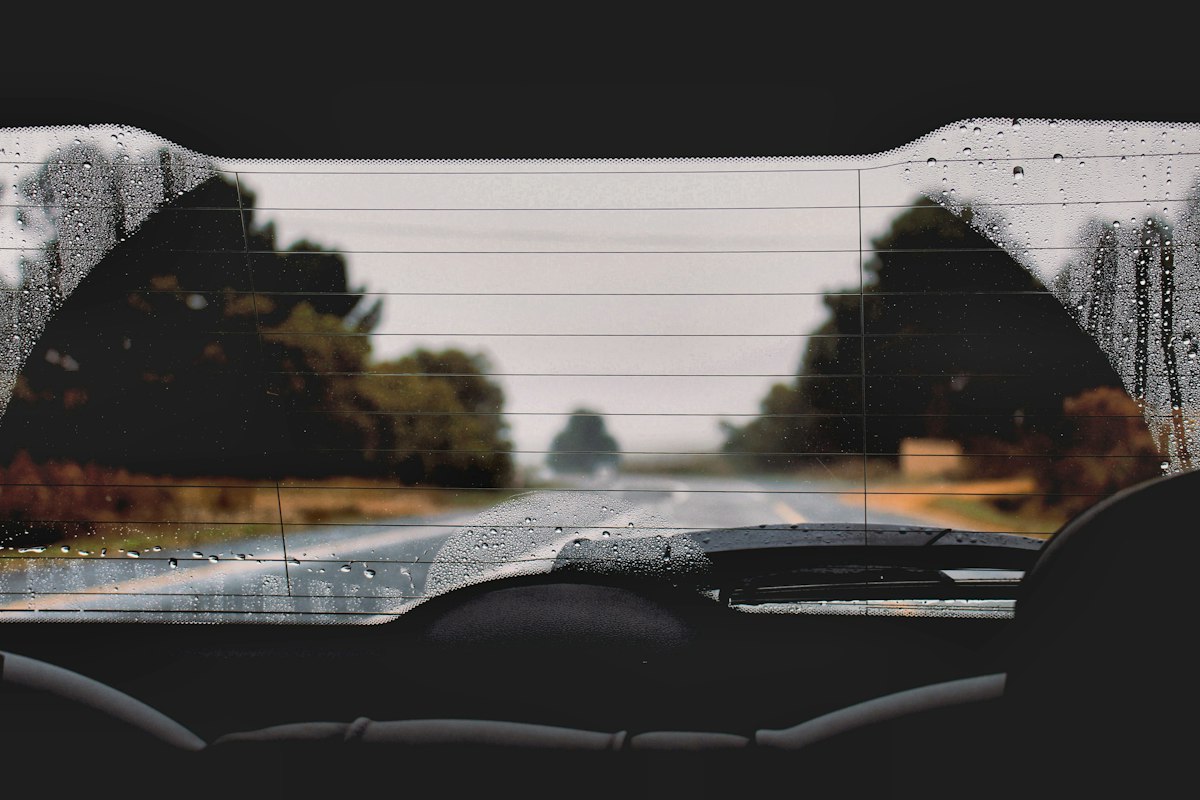
Short answer: The haze is a residue film, usually chemicals off-gassing from your dashboard and trim that evaporate in a hot cabin and condense on the cooler glass, with smoke, vape residue, dressing overspray and skin oil adding to it. It comes off with an ammonia-free glass cleaner and a two-towel method (one damp, one dry), but it keeps coming back because the source is the dash, not the glass. If the film is greasy, smells sweet and returns within days, suspect a leaking heater core and see a mechanic, because no cleaning fixes that.
You notice it at the worst possible moment. The glass looked fine at noon, and then you turn west on the drive home and the whole windshield lights up in a milky smear that makes it hard to see the car ahead. You wipe it, it smears, and a few weeks after a proper cleaning it is back. That is the clue: a film that returns on its own is being fed by something inside the car.
Where the Film Actually Comes From
The most common source is off-gassing. Dashboards, door panels, seat foam, carpet backing and the adhesives holding it all together contain plasticizers and other volatile compounds that keep the materials soft. Heat drives those compounds out of the plastic as vapor. When that vapor touches a surface cooler than the air around it, it condenses and stays there. In a parked car, the coolest large surface is the glass, and the windshield sits directly above the biggest single piece of plastic in the cabin, angled almost flat over it. That is why the windshield fogs up worst, and why the bottom third, nearest the dash, is usually the dirtiest.
It is the same chemistry behind the new-car smell, strongest in a car's first year or two, but it never fully stops. In the open surface lots of the Santa Clara Valley, the cabin bakes most afternoons from May through October.
Other sources stack on top of it:
- Vaping and smoking. Vape aerosol is mostly propylene glycol and vegetable glycerin, which leaves a slick, greasy layer that smears instead of wiping clean. Cigarette smoke leaves a yellow-brown tar film. (For smoke, see our guide to getting smoke smell out of a car.)
- Dressing overspray. Spray-on dash shine drifts onto the glass, and silicone-heavy dressings are often behind a sticky dashboard.
- Hands, breath and the HVAC system. Touching the glass, wiping fog with a palm, and recirculating air through a dirty cabin filter all add residue.
- Coolant vapor from a leaking heater core. The one that matters most to catch; see below.
Diagnose It Before You Clean It
Run a dry white microfiber towel across the bottom of the windshield, then check the towel and the glass under a flashlight. Most cars show two or three of these at once.
| Source | What you see and smell | How fast it comes back | What actually fixes it |
|---|---|---|---|
| Dashboard off-gassing | Even, faint gray film, worst at the bottom of the windshield. No smell. | Weeks. Faster in a car that sits in full sun all day. | Clean the glass, then clean the dash so the source holds less residue |
| Vape residue | Slick, greasy, smears into rainbow streaks when wiped | Days, with regular vaping inside | Alcohol pass, then glass cleaner. Stop vaping in the car or it returns |
| Smoke tar | Yellow or brown on a white towel. Stale smell | Days to weeks | Glass plus full interior clean. Headliner and vents hold it too |
| Dressing overspray | Spotty, oily patches, heaviest near the dash and A-pillars | Every time you apply dressing | Apply dressing to a towel, never spray near the glass |
| Heater core leak | Greasy film, sweet syrupy smell, glass fogs when the heater runs | Days, sometimes overnight | A mechanic. Cleaning only buys you a few days |
Why the Haze Is a Bigger Problem in Fall and Winter
Haze barely matters under a high summer sun. It becomes a safety problem when light hits the glass at a low angle, because the film scatters it across the whole windshield. From October on, the sun sits low during both commutes. Anyone heading east on 237 or Central Expressway in the morning, or driving toward Cupertino on 280 in the late afternoon, is driving directly into it. Oncoming headlights on wet nights do the same.
The first rains add a second problem: condensation forms more easily on contaminated glass, so a filmy windshield fogs faster on a cold morning and clears slower. Our Bay Area rainy season prep guide covers the outside; clean interior glass belongs on the same list.
How to Clean It Properly: The Two-Towel Method
You need three clean microfiber glass towels (waffle weave or short pile, not the fluffy paint kind), an ammonia-free automotive glass cleaner, and, for vape or silicone film, isopropyl alcohol diluted roughly half and half with distilled water. Skip paper towels; they leave lint and do not lift oily film.
- Work on cool glass, in shade. Cleaner flashes off hot glass before you can wipe it, which causes most streaks.
- Spray the towel, not the glass. Spraying the windshield sends overspray onto the dash and into the defroster vents.
- Cut through oily film first, if you have it. If the dry towel test showed a greasy smear, wipe the glass once with a towel dampened in the alcohol mix before using glass cleaner. Keep it off the dash and any aftermarket tint film.
- Clean in halves, from the passenger seat for the far side. Reaching across the cabin is how the lower passenger corner gets missed.
- Buff dry immediately with the second towel. Never let the cleaner air-dry.
- Get into the bottom edge with the back of your hand. Wrap the towel over the back of your hand and lay it flat against the glass. It slides into the gap where the glass meets the dash.
- Wipe in one direction inside and the other outside. Horizontal strokes inside, vertical outside. If a streak remains, you know which side of the glass it is on.
- Inspect with a flashlight at a low angle. Hold the light almost flat against the glass. Remaining film lights up. Final buff with the third, dry towel.
Then clean the dashboard. Almost everyone skips this, and it is why the haze returns so fast. Wipe the dash, instrument cluster hood and defroster vent area with interior cleaner and dry it. You cannot stop off-gassing, but less residue on the dash means less on the glass the next time the car heats up. For the rest of the cabin, see our full interior cleaning guide.
Mistakes that make the haze worse
- Household ammonia cleaners. Ammonia can damage aftermarket tint on side and rear glass. Use an ammonia-free, tint-safe cleaner.
- Wiping fog with your hand or sleeve. It adds skin oil and lint, so the glass fogs again faster.
- Dressing the dash after cleaning the glass. Do the dash first, the glass last.
The Heater Core Check: When It Is Not a Cleaning Problem
If the film is greasy, smells sweet, and comes back within a day or two, stop cleaning and get the car checked. The heater core is a small radiator behind the dashboard that warms the cabin using engine coolant. When it starts to leak, coolant vapor comes out of the vents and condenses on the windshield. Other signs: the windshield fogs up the moment you turn on the heat, the coolant level drops between top-offs, or the passenger-side carpet feels damp. Coolant is toxic, the leak usually gets worse, and the fogging can come on suddenly while you are driving. This is a repair for a mechanic, not something any detailer can clean away.
When This Is Beyond a Wipe-Down
Some glass problems look like haze but no cleaning will touch them:
- Fine scratches on the inside of the glass, usually from rings, keys, or a gritty towel. They catch light like haze but do not wipe off. We do not polish glass, and we will tell you so rather than charge you to clean around it.
- A milky or cloudy band at the very edge of the windshield that does not change when you clean it. That can be the laminate layer between the two sheets of glass separating, and it is a job for an auto glass shop.
- Bubbling, purple, or peeling tint on side or rear windows. That is failing film. We do not install or remove window tint, so that is a tint shop job.
- A heater core leak, covered above. Mechanic first, then a cleaning.
Everything else, the off-gassing film, smoke, vape and overspray, is what an interior cleaning is for.
What We Actually Do About It
Every interior we do includes the inside of all the glass with the two-towel method above, including the windshield's bottom edge and the rear glass. On our XN Standard Interior ($225 for a sedan, $255 SUV, $285 truck) the dash, vents and trim get cleaned first, so the glass is the last thing touched and the source of the film is reduced along with the film itself. If the car has years of built-up dressing or smoke residue, our interior deep clean strips that before anything else, which is what actually slows down how quickly the haze returns.
Because the film always returns, it is a strong case for a monthly membership. Glass cleaned every few weeks never reaches the point where evening sun turns it white.
One honest note on our Ceramic Window Spray add-on (+$8): it is a water-repelling treatment for the outside of the glass, so rain beads and rolls off. Worth adding before the rains, but it does nothing for interior haze.
Mobile service needs an outdoor water tap and a power outlet where the car is parked. We bring all professional equipment and products, but work from your tap and outlet. If you have neither, you can drop the car off at our shop at 1850 Warburton Ave in Santa Clara.
The products we actually use
Interior glass gets a streak-free cleaner from Gyeon's glass line, because it leaves nothing behind for the next layer of film to cling to. Gyeon is best known for long-term paint coatings, which we do not apply; we use only their glass, interior and sealant products. The dash and trim get Chemical Guys interior cleaner first, and leather dash tops or door caps get Meguiar's leather cleaner and conditioner instead of a glossy dressing that would end up on the glass.
What we do not offer, so nobody books expecting it: no long-term paint coatings, no machine polishing, no scratch or swirl removal, no film or tint, and no glass repair.
Frequently Asked Questions
Why does my windshield get hazy again so soon after I clean it?
Because the source is still in the car. Dashboard plastics keep releasing vapor every time the cabin heats up, and it condenses back on the glass. Cleaning the dash as well as the glass, using a sunshade, and keeping dressing sprays away from the windshield all slow it down, but in a car that sits in full sun the film will usually start to show again within a few weeks.
Is the haze on the inside of my windshield dangerous?
It can be. The film scatters low-angle light, so the whole windshield glows when you drive into a rising or setting sun or face oncoming headlights on a wet night, which cuts how well you can see the road. It also makes the glass fog faster in cold, damp weather.
What is the best thing to clean the inside of a windshield with?
An ammonia-free automotive glass cleaner and two or three clean microfiber glass towels, one damp and one dry. For a greasy film from vaping or dashboard spray, wipe first with isopropyl alcohol diluted about half and half with distilled water, then follow with the glass cleaner. Avoid paper towels and household ammonia cleaners.
Can a heater core leak cause a film on the windshield?
Yes. A leaking heater core sends coolant vapor through the vents, and it leaves a greasy film with a sweet smell that returns within a day or two of cleaning. If you also see fogging when the heater is on, a dropping coolant level or a damp passenger floor, have a mechanic check it. That is a repair, not a cleaning job.
Does vaping in the car cause a film on the windows?
Yes, and it is one of the hardest films to remove. Vape aerosol leaves a slick glycerin residue that smears rather than wiping clean. An alcohol pass followed by glass cleaner takes it off, but it will keep building up as long as people vape inside the car.
Will your Ceramic Window Spray stop the inside of my windshield from getting hazy?
No. The Ceramic Window Spray is a water-repelling treatment for the outside of the glass so rain beads off. Interior haze comes from residue inside the cabin, and the fix for that is cleaning the glass and the dashboard regularly.
Clear Glass, Clean Dash
Interior glass done right, plus the dashboard that keeps re-fogging it. Call or text (408) 666-0407, or book online.
Book Now →